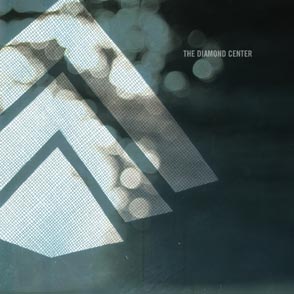
Blending musical elements of folk rock and psychedelia, Richmond,
Virginia’s The Diamond Center hit upon their 17th release with this
two-song seven-inch EP. Adorning side A is the featured cut
“California,” a dreamy tune driven by the light and floaty vocals of
Brandy Price with the backing of guitars and organ, giving the song a
true ’60s throwback sound — imagine The Doors meet early Pink Floyd.
“Bells” takes up side B’s seven minutes and 19 seconds. Much like
side A, the sound replicates that progressive psychedelic sound of the
past. Here the sound has a much heavier Floyd influence, reflected in
the chord progressions and the overall structure of the song (Floyd’s
“Astronomy Domine” and “Echoes” come to mind). Vocals on “Bells” are
shared by Price and Kyle Harris. While I personally enjoyed Price’s
vocals alone on “California,” the addition to Harris’s vocals really
round out the band’s sound and perhaps makes it more whole as a product.
As a two-track EP, I really enjoyed the down-tempo feel of this
release — even if it’s just a tease of what The Diamond Center has to
offer.
(Funny/Not Funny Records, no address provided)
Reviews, Concert Photography and other what-have-yous...
Thursday, May 17, 2012
Wednesday, May 2, 2012
BRENDAN KELLY AND THE WANDERING BIRDS – I’d Rather Die Than Live Forever
It has been more than 10 years since Brendan Kelly joined forces with Chris McCaughan and Neil Hennessy to form The Lawrence Arms.
While The Lawrence Arms continues to roll along as a successful
Chi-Town punk rock outfit, the need to break out of the punk rock niche
seems to be what Brendan Kelly is looking for in the form of the
semi-solo effort I’d Rather Die Than Live Forever.
The album features Kelly on vocals and guitar with a backing band to fill in the blanks. In many respects, this album feels like a stripped-down Lawrence Arms album. This could be because Kelly’s vocals are so recognizable and synonymous with the band’s sound. That familiar Arms’ sound can be heard throughout the album, especially in cuts like “Doin’ Crimes” and “What’s a Boy To Do?”
Mixed in with some of the more punk-ish cuts are a few toned-down tracks. “Ramblin’ Revisited” comes across as a driving acoustic Americana folk camp-side tune, which is perfect considering Kelly’s vocals scream to be heard in a song like this. Other cuts off of I’d Rather Die Than Live Forever range from the more catchy selections like the opening track “Suffer The Children, Come Unto Me,” to more straightforward rock tunes like, “East St. Louis.” Even with Kelly not settling to one particular musical on this effort, the flow of this album works nicely. Each track seems to flow right into the next. A solid album indeed.
(Red Scare Industries, PO Box 13285, Chicago, IL 60613)
The album features Kelly on vocals and guitar with a backing band to fill in the blanks. In many respects, this album feels like a stripped-down Lawrence Arms album. This could be because Kelly’s vocals are so recognizable and synonymous with the band’s sound. That familiar Arms’ sound can be heard throughout the album, especially in cuts like “Doin’ Crimes” and “What’s a Boy To Do?”
Mixed in with some of the more punk-ish cuts are a few toned-down tracks. “Ramblin’ Revisited” comes across as a driving acoustic Americana folk camp-side tune, which is perfect considering Kelly’s vocals scream to be heard in a song like this. Other cuts off of I’d Rather Die Than Live Forever range from the more catchy selections like the opening track “Suffer The Children, Come Unto Me,” to more straightforward rock tunes like, “East St. Louis.” Even with Kelly not settling to one particular musical on this effort, the flow of this album works nicely. Each track seems to flow right into the next. A solid album indeed.
(Red Scare Industries, PO Box 13285, Chicago, IL 60613)
Thursday, April 26, 2012
Interview: Mike Mictlan of Doomtree
| Photo By Prentice Danner |
“We’re more of a legion than anything,” states Mike Mictlan of the Minneapolis, Minnesota hip-hop legion known as Doomtree.
Since 2001, Doomtree has been laying down beats and lyrics in the Minneapolis metropolitan area to an ever growing hip-hop community. Consisting of seven total members, Doomtree’s sound envelops several different musical styles, including punk rock. Most recently, they self-released the album No Kings, gaining mostly positive reviews from a wide variety of media outlets. As Mictlan puts it, the making of No Kings took on biblical proportions — well, sort of.
“All seven members of Doomtree sequestered ourselves in a cabin for a week in northern Wisconsin and wrote 11 out of 12 of the songs in about five different all-day writing sessions,” he says. “The music was made over the previous two months. After writing, we came home and recorded all the songs in about two weeks. Then the following two weeks we mixed and mastered it. So it’s very similar to the whole ‘Christian creation story,’ but we never rested on the seventh day. We just ate a lot and drank.”
I know when I think of hip-hop communities, both the West and East Coast come to mind — not Minnesota. But along with other hip-hop acts like Atmosphere, Doomtree have help build a thriving community of hip-hop and rap enthusiasts in the Twin Cities area. Each December brings what is known as the Doomtree Blowout, where the entire group takes to the stage at the First Avenue music venue in downtown Minneapolis. While New York has its set of bragging rights for their hip-hop community, don’t discount the camaraderie in the chilly Midwest.
“I feel like our hip-hop scene in Minneapolis is a lot more honest and hardworking than many other communities,” Mictlan explains. “There’s a big live show culture here that has always been here. But then again, I might be biased. Then again, I’ve traveled the country and there is no place like Minneapolis.”
The love for live shows in a place like Minnesota makes perfect sense — enjoy some live hip-hop while warming up in a sold-out music venue. But if you doubt the love for Doomtree outside of their local community, you should check out their touring schedule for 2012, including a stop back in March at SXSW in Austin Texas.
“I remember not sleeping, tacos, bratwurst, sweat and people,” recalls Mictlan. “Austin is already a fun town without what’s going on, so it’s pure madness with all those people.”
And while SXSW seems like a musical paradise for enthusiasts and concertgoers, it can be a daunting task to play.
“We definitely came and conquered,” said Mictlan. “[For some of us, this was] our fifth year in a row [playing SXSW]. My view is, you go there and kick ass, or else you’ll lose.”
While not yet on the mainstream scene, Doomtree has become established as a heavy-hitter in the indie hip-hop scene. Playing tours nationwide and having devout fans, including some who have tattooed the “teeth and wings” Doomtree logo — a logo that almost wasn’t.
“Well, it was either going to be that or a meat cleaver tied to a shotgun,” says Mictlan. “We thought the former would be an easier sale.”
With a community of hip-hop enthusiasts and other local artists, the addition of more crew members to Doomtree is a definite possibility in the future. With the group bringing together various different musicians and artists from the Twin Cities area, the option to expand Doomtree or promote other acts is always an option, though not exactly needed in a musical sense.
“Rapping isn’t our only asset,” explains Mictlan. “As of right now we have plenty of rappers. I see Doomtree expanding in a way that doesn’t necessarily depend on adding musical elements — there are plenty of people already close to us and live in our city whose music we would release in a heartbeat.”
With 2012 in full swing, Doomtree sets their sights on the future. With tour stops in Europe and their annual Blowout in December, things can only get better for the septet.
Labels:
DOOMTREE,
HIP HOP,
INTERVIEW,
MIKE MICTLAN,
MINNEAPOLIS,
MINNESOTA,
SXSW
Friday, April 20, 2012
MIKE WATT: ON AND OFF BASS by Mike Watt
Three Rooms Press, 100 pages, hardcover, $25.00
Looking west from the shores of Long Beach, California stands the tall cranes of the Port of Los Angeles, and just beyond them sits the small portside city of San Pedro. It was in this city that author Charles Bukowski spent his last years of his life. It’s a place where the films such as Chinatown and The Usual Suspects feature some of their most memorable scenes.
For the punk rock movement of the early 1980s, it’s also the birthplace of the Minutemen. Unfortunately, the band’s existence was cut short when front man and guitarist D. Boon died in a car accident after the band’s van ran off the road in Arizona in 1985. Band mate and fellow San Pedro native Mike Watt went on to form the group fIREHOSE, as well as play bass in the revamped version of The Stooges.
Along with his love for music, Watt also prides himself as being a native and resident of San Pedro (his internet radio show is appropriately titled The Watt From Pedro Show). What is not commonly known is that Mike Watt has a love and interest in photography, especially capturing the environment that surround San Pedro. All of these things are examined in his photographic memoir, Mike Watt : On and Off Bass.
When I think of memoirs, especially those of rock stars and musicians, I think of a book full of stories from the road –- insight on the drama of being in a band, and a look into their youth and growing up. Basically, a book full of pats on the back and self-gratifying praise for being so lucky to do what you love (hopefully) for a living. This book, however, is the furthest things from that.
In these 100 pages, the focus is mostly on Watt’s amazing photographic images of San Pedro, taken from on land as well as at sea (via kayak): early morning shots of the Port of Los Angeles featuring the heavy coastal fog being broken up by the rising sun. Pictures of pelicans, seals, and seagulls resting ashore or on buoys. Images of cargo ships, large cranes, and other industrial equipment clash against the reflection of the water and the clashing of the waves. Watt’s ability to capture both the natural and man-made aspects that make up the community and elements that make up San Pedro really shines through.
Along with these amazing pictures, Watt also gives the reader a chance to read some insightful glimpses into being on and off the road — the emphasis being on the word “glimpse.” The written passages are quite short and small in detail. We also are given a few poems written by Watt. The diary passes span throughout the 2000s, and feature stories about particular performances, encounters with fans, thoughts on life, and his love for John Coltrane.
Mike Watt : On and Off Bass gives you a real down-to-earth look at who he is. It’s a very minimalistic look back at his life, combining the things he cares deeply about: San Pedro, music, and photography. The book proves that you do not need to bash your fans over the head with anecdotes of how great your life has been — this simplistic approach makes for a refreshing and insightful read.
Looking west from the shores of Long Beach, California stands the tall cranes of the Port of Los Angeles, and just beyond them sits the small portside city of San Pedro. It was in this city that author Charles Bukowski spent his last years of his life. It’s a place where the films such as Chinatown and The Usual Suspects feature some of their most memorable scenes.
For the punk rock movement of the early 1980s, it’s also the birthplace of the Minutemen. Unfortunately, the band’s existence was cut short when front man and guitarist D. Boon died in a car accident after the band’s van ran off the road in Arizona in 1985. Band mate and fellow San Pedro native Mike Watt went on to form the group fIREHOSE, as well as play bass in the revamped version of The Stooges.
Along with his love for music, Watt also prides himself as being a native and resident of San Pedro (his internet radio show is appropriately titled The Watt From Pedro Show). What is not commonly known is that Mike Watt has a love and interest in photography, especially capturing the environment that surround San Pedro. All of these things are examined in his photographic memoir, Mike Watt : On and Off Bass.
When I think of memoirs, especially those of rock stars and musicians, I think of a book full of stories from the road –- insight on the drama of being in a band, and a look into their youth and growing up. Basically, a book full of pats on the back and self-gratifying praise for being so lucky to do what you love (hopefully) for a living. This book, however, is the furthest things from that.
In these 100 pages, the focus is mostly on Watt’s amazing photographic images of San Pedro, taken from on land as well as at sea (via kayak): early morning shots of the Port of Los Angeles featuring the heavy coastal fog being broken up by the rising sun. Pictures of pelicans, seals, and seagulls resting ashore or on buoys. Images of cargo ships, large cranes, and other industrial equipment clash against the reflection of the water and the clashing of the waves. Watt’s ability to capture both the natural and man-made aspects that make up the community and elements that make up San Pedro really shines through.
Along with these amazing pictures, Watt also gives the reader a chance to read some insightful glimpses into being on and off the road — the emphasis being on the word “glimpse.” The written passages are quite short and small in detail. We also are given a few poems written by Watt. The diary passes span throughout the 2000s, and feature stories about particular performances, encounters with fans, thoughts on life, and his love for John Coltrane.
Mike Watt : On and Off Bass gives you a real down-to-earth look at who he is. It’s a very minimalistic look back at his life, combining the things he cares deeply about: San Pedro, music, and photography. The book proves that you do not need to bash your fans over the head with anecdotes of how great your life has been — this simplistic approach makes for a refreshing and insightful read.
Friday, March 30, 2012
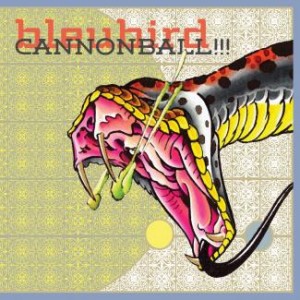
BLEUBIRD – CANNONBALL!!!
Mixing elements of spoken word poetry and smooth free-styling is Florida-based emcee Bleubird and his new album CANNONBALL!!!. Not being familiar to his brand of hip-hop, my first impression of Bleubird’s style via the first cut on CANNONBALL!!! (“Fog Rollin”) was that he has been influenced by the likes of Sage Francis. Bleubird’s approach is much like Francis in the way he presents a laid-back flow that easily goes along with the beat of the song.
As the album moves along, I’m struck by the differences in beats from track to track. “Black Sandcastles” features more of an infectious club beat that definitely has a modern mainstream feel to it, while the cut “Pimp Hand” has a deep bass and hi-hat sampled sound (reminiscent of something Jamiroquai would use). Along with Bleubird’s vocals, “Pimp Hand” definitely shines as one of the highlight tracks off of this album.
An odd wrench is thrown into the gears by way of the sixth track, “Christian Wife,” an acoustic guitar duet with Lynne Piper. It’s a really odd break from the hip-hop beats, but works in a way as an intermission with its dry wit lyrical content. Beats laid down for Bleubird’s vocals range from sampled cuts from various sources to live instrumentation of drums, double bass, pianos and acoustic guitars. The album also features special appearances by Radical Face, Astronautalis, and Ceschi.
CANNONBALL!!! has some good material contained in its 11 tracks and provides as a good introduction into the music and artistic styling’s of Bleubird. While I think this album deserves a marginal nod, in the future I would like to hear more faster flows as opposed to the slowed down spoken word segments.
(Fake Four Inc., no address provided)
As the album moves along, I’m struck by the differences in beats from track to track. “Black Sandcastles” features more of an infectious club beat that definitely has a modern mainstream feel to it, while the cut “Pimp Hand” has a deep bass and hi-hat sampled sound (reminiscent of something Jamiroquai would use). Along with Bleubird’s vocals, “Pimp Hand” definitely shines as one of the highlight tracks off of this album.
An odd wrench is thrown into the gears by way of the sixth track, “Christian Wife,” an acoustic guitar duet with Lynne Piper. It’s a really odd break from the hip-hop beats, but works in a way as an intermission with its dry wit lyrical content. Beats laid down for Bleubird’s vocals range from sampled cuts from various sources to live instrumentation of drums, double bass, pianos and acoustic guitars. The album also features special appearances by Radical Face, Astronautalis, and Ceschi.
CANNONBALL!!! has some good material contained in its 11 tracks and provides as a good introduction into the music and artistic styling’s of Bleubird. While I think this album deserves a marginal nod, in the future I would like to hear more faster flows as opposed to the slowed down spoken word segments.
(Fake Four Inc., no address provided)
Wednesday, March 14, 2012
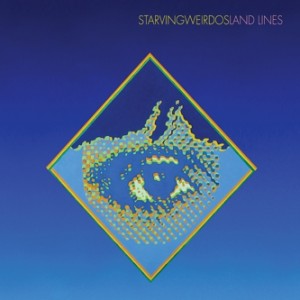
STARVING WEIRDOS – Land Lines
I like to pride myself as someone who is open to pretty much any kind of music for at least one listen. Sure, I know what I like and what I don’t like, but I’m always down to check out various kinds of sounds. Take Land Lines from Starving Weirdos: this experimental outfit out of northern California have been brewing up an eclectic batch of ambient material for more than 10 years. While their sound could be described chaotic, disorganized, and essentially be considered “noise” to the average listener, those who appreciate the minimalist — yet wildly intricate – sounds featured on this album will find themselves taken in by what their ears pick up.
Most of the seven tracks featured on Land Lines walk a fine line between using natural elements and sounds and synthetic electronic tones, as a lot of modern ambient artists do. Vocals faintly drift in and out of cuts like “Periods” and the opening track “In Our Way,” but the album remains primarily instrumental. “Meditator” lulls the listener with its Middle Eastern vibe at the halfway part of the album, a truly mellow track. One of the more interesting tracks from Land Lines as to be “Dreams, Endless,” a song that incorporates a soft piano part that lightly plays along as the drones and jangly trumpets of the background come to essentially consume the piano’s sound.
The album closes with another Middle Eastern-influenced track, “Land Lines.” The sitar has its sound warped by effects and sound manipulation, only to bring the sound back to a fading drone to end the album.
Land Lines reminds me of the 2006 release of Dead Voices On Air’s From Labrador to Madagascar in the sense of the fine line walked between natural tones and manufactured electronic sounds. This album is not for everyone, as some will fail to see the artistic achievements made with this album. As Dead Voices On Air’s Mark Spybey says about his group’s music, it’s “music for the eyes.” The very same could be said about what Starving Weirdos have presented here.
(Amish Records, PO Box 1841, New York, NY 10013)
Most of the seven tracks featured on Land Lines walk a fine line between using natural elements and sounds and synthetic electronic tones, as a lot of modern ambient artists do. Vocals faintly drift in and out of cuts like “Periods” and the opening track “In Our Way,” but the album remains primarily instrumental. “Meditator” lulls the listener with its Middle Eastern vibe at the halfway part of the album, a truly mellow track. One of the more interesting tracks from Land Lines as to be “Dreams, Endless,” a song that incorporates a soft piano part that lightly plays along as the drones and jangly trumpets of the background come to essentially consume the piano’s sound.
The album closes with another Middle Eastern-influenced track, “Land Lines.” The sitar has its sound warped by effects and sound manipulation, only to bring the sound back to a fading drone to end the album.
Land Lines reminds me of the 2006 release of Dead Voices On Air’s From Labrador to Madagascar in the sense of the fine line walked between natural tones and manufactured electronic sounds. This album is not for everyone, as some will fail to see the artistic achievements made with this album. As Dead Voices On Air’s Mark Spybey says about his group’s music, it’s “music for the eyes.” The very same could be said about what Starving Weirdos have presented here.
(Amish Records, PO Box 1841, New York, NY 10013)
Monday, March 12, 2012
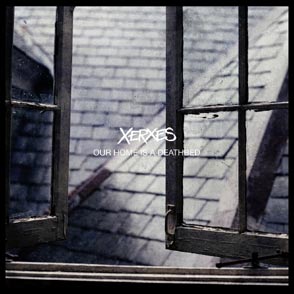
XERXES – Our Home is a Deathbed
It appears that Halls cough drops has a new spokesperson in Xerxes vocalist Calvin Philley. Okay, not really, but after listening to the 12 tracks on their debut album Our Home is a Deathbed, I would say that anyone who thrashes their voice like he does would need a lifetime supply of throat lozenges.
Formed in 2009, Xerxes may appear on the surface to be just another hardcore act, but after examining the material found on this album, it’s clear that there’s more than meets the ear. The opening track, “Wake,” serves as an intro that does not truly reveal what is next to come. Be sure to have your speakers at a reasonable level, as the second track, “Sleep,” hits hard with those thrashed vocals of Philley over the chaotic guitars and percussion.
One of the first audible surprises found on Our Home is a Deathbed comes with the third track, “Tide,” as we are confronted with a straight-up punk rock beat. Other odd elements of non-hardcore sounds come out in a few of the other songs featured on this effort. “Suburban Asphalt” has an indie rock feel to the instrumentation, all while Philley blasts his voice out in a true hardcore style. One thing I admire about Xerxes and their debut album is the fact that they are attempting to draw from other musical styles outside of the hardcore arena. Taking chances like that might piss off some puritans, but to people like myself it shows an attempt to keep things fresh and original.
(No Sleep Records, 16651 Gothard Street Unit E, Huntington Beach, CA 92647)
Formed in 2009, Xerxes may appear on the surface to be just another hardcore act, but after examining the material found on this album, it’s clear that there’s more than meets the ear. The opening track, “Wake,” serves as an intro that does not truly reveal what is next to come. Be sure to have your speakers at a reasonable level, as the second track, “Sleep,” hits hard with those thrashed vocals of Philley over the chaotic guitars and percussion.
One of the first audible surprises found on Our Home is a Deathbed comes with the third track, “Tide,” as we are confronted with a straight-up punk rock beat. Other odd elements of non-hardcore sounds come out in a few of the other songs featured on this effort. “Suburban Asphalt” has an indie rock feel to the instrumentation, all while Philley blasts his voice out in a true hardcore style. One thing I admire about Xerxes and their debut album is the fact that they are attempting to draw from other musical styles outside of the hardcore arena. Taking chances like that might piss off some puritans, but to people like myself it shows an attempt to keep things fresh and original.
(No Sleep Records, 16651 Gothard Street Unit E, Huntington Beach, CA 92647)
Subscribe to:
Posts (Atom)