Sunday, November 27, 2011

LOS ANGELES STORIES by Ry Cooder

City Lights, 232 pages, paperback, $15.95
 

I remember hearing Ry Cooder’s 2005 album Chavez Ravine after my old man burned me a copy of it and said I should check it out, especially after moving to southern California. The concept album tells the story of the Chicano community located just outside of downtown Los Angeles and the ultimate displacement of the residents of Chavez Ravine in order to develop new housing. The housing development plans fell through and the land was given to Walter O’Malley, the owner of the Brooklyn Dodgers, as part of an agreement to bring the Dodgers to LA. That forgotten history was brought to life with Cooder’s concept album — full of Chicano flavor built around Cooder’s guitar work, and Americana roots folk storytelling featuring many larger-than-life characters who were actually involved in the situation at Chavez Ravine.

In many ways, Los Angeles Stories is an extension of the story of Chavez Ravine and the people who inhabited the community. At the very least, it serves as an annex to the Chavez Ravine incident. This is Cooder’s first written work, a collection of short stories he penned over time, originally created for his own enjoyment. After a discussion with Bob Dylan regarding an upcoming tour Ry was heading out on, Cooder was convinced by Dylan to have a small run of these stories printed up to sell at each show. The tour fell through and somehow a copy of these stories — which were thrown together in a hurry — ended up in the hands of City Lights Books in San Francisco.

“I got an email saying, ‘We’d like to put out an edition of this,’ and I said that’s an honor for me – that’s terrific! Really? You sure?” said Cooder in a recent interview conducted on Los Angeles radio station KPCC 89.3 FM. “I’m not a novelist or writer in that sense. It’s just me fooling around, like with music in the same way. Like writing a song.”

The words that occupy the 232 pages of this book bring to life a time long gone. Los Angeles today is a busy and crowded metropolitan mecca, a true concrete jungle where millions of people work, live, and play among the smog-filled air and the bumper-to-bumper traffic. Los Angeles Stories gives us eight short stories set between the 1940s and late 1950s. During this time, LA was looked upon as a place for opportunity for those outside of the West Coast — A destination for folks back east. If it was a job working for Douglas Aircraft (a booming business with the progression of aviation technology) or getting into the music business you sought, LA was the place to be.

On the flip-side, Los Angeles also had a seedy side (and still does, if you care to look for it). Shady characters including schemers, lowlifes, junkies, and con-artists live among the dreamers, especially during the time period featured in Los Angeles Stories. 

While some of the stories focus on those who end up in LA, Cooder’s focus in this book is mainly about those who have called LA home for most of their lives. The way Cooder describes the neighborhoods in LA — the homes and the working class — really paints a picture that doesn’t just give you an idea of what it was like; rather, he brings these images to life, especially if you live in or visit LA today. And if anyone can give accurate descriptions of what it was like in those days in Los Angeles, Cooder can since he grew up in these neighborhoods. I found myself saying “Been there!” many times while reading this book, as places like Pershing Square and Philippe’s still stand to this day.

I believe it was Stephen King who once said something like, “I don’t write about extraordinary people, I write about ordinary people in extraordinary situations.” That’s the formula Ry Cooder has used in this book. Most of the stories feature ordinary people — including quite a few musicians — who find themselves in very peculiar situations.

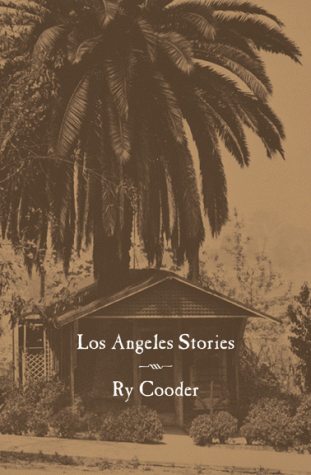
One line we keep hearing throughout this book is police officers telling characters, “Don’t leave town,” as one character after another gets caught up in some incriminating situations. The stories are full of suspense and read a lot like detective novels and pulp magazines (fitting for the era these stories take place). Another amusing thing about the stories is Cooder’s ability to occasionally cross characters from one story into another, giving the reader a feeling that while LA is a big place, it can also be a place where people get around. The cover also sets the stage for the stories found in this book. It features a classic California bungalow with a giant palm tree growing right through the roof, colored in an old film grain color, preparing the reader for a ride back in time.

Los Angeles Stories really captures the feel of LA in the ’40s and ’50s, or at least what I assume it was like. The stories, with a cast of larger than life characters and interesting plot twists, left me turning each page with wonder and interest in what was going to happen next. In the span of 232 pages, I feel like I’ve been to a museum or maybe jumped back in time to a place where I had no ability to be or exist in.

Ry Cooder has earned a reputation of being a wonderful musician with the ability to tell stories with his music. Now, Cooder has taken his storytelling to written form and will likely impress the reading community with his brand of true life-inspired tales of a time long gone. I hope this first time effort by Mr. Cooder won’t be his last. A truly excellent read.

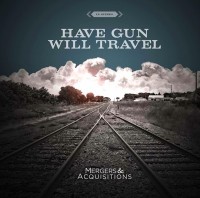
HAVE GUN WILL TRAVEL – Mergers & Acquisitions

Cooking up their own brand of alternative folk, Have Gun Will Travel have released their third album Mergers & Acquisitions. This collection of 12 folk-driven songs break off into many directions including traditional folk, blues, and  roots rock and roll, featuring the stellar vocals of Matt Burke.


On first listen, I thought this was a new side project of Tom Petty (yes, the Tom Petty), as Burke’s vocals are eerily similar to Petty’s singing voice (both outfits are out of Florida, Petty from Gainesville and Burke from Bradenton), with a hint of Bob Dylan thrown in. A majority of the songs on Mergers & Acquisitions tell stories; songs about life on the road, traveling, and days of old.

With Burke’s memorable vocals and the music provided by the backing band — especially with the use of steel guitar provided by Scott Anderson — the album relies on the traditional folk style, but with toe-tapping tunes like “Song of Seven Sisters,” the album cruises along like an Americana road trip through the heart of this nation. This is an all around enjoyable album full of infectiously catchy songs and moving stories beautifully sung by Burke.

(Suburban Home Records, PO Box 40757, Denver, CO 80204)

Wednesday, October 19, 2011

OCCUPY LOS ANGELES - October 8th, 2011 – City Hall

In February of 2003 I attended my first protest, located in downtown San Francisco in opposition to the imminent invasion of Iraq by US and allied forces. I remember the feeling of approaching the mass of tens of thousands of people standing on Market Street. The sound was intense, like something you’d hear at a sporting event — if the crowd was literally on fire. It was then that I realized how powerful people can be when united for a cause.

Recently, Adbusters — a Canadian activist foundation that uses culture jamming and advertising spoofs to push an anti-consumerist agenda — came up with an idea to set up camp in New York’s financial district on September 17th. The small gathering of anti-capitalism and anti-corporatism protesters has turned into a monster of a political and social movement, prompting other Occupy Wall Street encampments to take shape not only in the US, but around the world.

With so many in the mainstream media making this out to be a joke, and right wing outlets so quick to dismiss the Occupy movement as a bunch of hippies who have no idea what they are protesting, I needed to get out there and see where these protesters are coming from.

On October 8th, I headed to downtown Los Angeles. Arriving at the encampment around noon, I found dozens upon dozens of tents sprawled across the many lawns of city hall. The area appeared relativity clean and organized, especially considering many had already called this area home for more than a week. Police presence was at a minimum, as I only spotted three officers in uniform during the span of the afternoon. With a music festival scheduled to start at noon, no one was at the microphone on the south end of the block. As I stood there taking in all the various signs, booths, and groups talking amongst themselves, I was caught off-guard by a single voice powered by a bullhorn at the edge of the block.

“It’s much bigger than Wall Street. It’s much bigger than just police brutality. It is a formation of a New World Order,” exclaims the man. These are the words of activist Shane Devins.

Originally from Las Vegas, Devins believes the corruption on Wall Street and in Washington, DC goes far beyond what we are led to believe. He believes organizations like the United Nations, the Bilderberg Group, the Council on Foreign Relations, and the Trilateral Commission are involved with an attempt to create a one world government. Using the private Federal Reserve as a vehicle to destroy the value of the US dollar by way of deflation, the destruction of the US economy will then give way to a new world currency regulated and controlled by the World Bank.

“It has taken almost a hundred years to cripple the US dollar,” says Devins. As I interview him, we search for water around the encampment. “And what Obama talked about at the G20 Summit 2009 is that the World Bank should be and will be the institution that will create a world currency, and that will be regulated under the World Bank and the World Bank will come under the authority of the United Nations.”

While some might balk at the notion of a conspiracy to usher in a one world currency, the actions of the Federal Reserve have brought on much scrutiny from many Occupy Wall Street protesters, leaving little room for straw-man arguments and calls of “kooky conspiracy theorists.”

Signs proclaiming “END THE FED” were a constant sighting at the LA Occupation. One must remember that the Federal Reserve is a private entity that doesn’t answer to Congress; their actions are kept in secret and their actions of manipulating monitory policy has proven to hurt the US economy more than help it. A number of protesters were also calling for the reinstatement of the Glass-Steagall Act, which prevented investment banks and commercial banks from merging. The act was repealed under the Clinton administration with the help of former Obama economic adviser Larry Summers. Many view the repeal as a precursor to the 2008 financial crisis.

Some of those in attendance aired out calls to end capitalism as a whole, though they were in the minority, despite attempts by the mainstream media to convince the public otherwise. Most in attendance were calling for an end of crony capitalism (i.e., “corporatism”). Corporatism is the merger of corporate and governmental powers — Benito Mussolini once stated that corporatism should essentially be called fascism, as many protesters would agree, charging that corporations own our leaders in Washington, DC by way of lobbyist money and the assignment of corporate big-wigs to high governmental positions. Another interesting contingency at the Occupy protest are supporters of the anti-war movement. While most may think of banks when it comes to Wall Street, we must remember that elements of the military industrial complex are a part of Wall Street.

While walking among the tent city, the people, and the countless signs airing out grievances, I found myself returning to those feelings I had back in 2003 in San Francisco. The feeling of community ingrained with those who have shared food, water, and space in a foreign home for over a week, and the camaraderie of people coming together in a peaceful way to air out their concerns and anger — could this be the start of a revolution? This worldwide phenomenon has given me hope that the masses are starting to wake up to the reality that business in Washington, DC continues as usual. Even under a democrat — especially a democrat who received more contributions from Wall Street than any other presidential candidate in US history. “Democrat” and “Republican” don’t matter at the end of the day. Both are guilty of supporting corporate interests over those they are supposed to represent.

Standing on the corner with tambourine and sign in hand, Angus Godwin expresses a sentiment I think is fitting for the majority of protesters who have found solidarity in the Occupy Wall Street movement: “We’re all here because we’re getting screwed, and because bankers are criminals.”

The question now begs to be asked: we have occupied — now what? The ball is in our court.
(Originally published on October 19th, 2011 at www.verbicidemagazine.com as part of several first hand accounts of the Occupy Wall Street movement from Verbicide contributors nationwide. To read other accounts of other protests, visit HERE)

THE TURBO AC’S – Kill Everyone

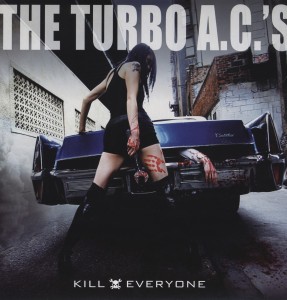
Ah! A new Turbo A.C.’s album! Time to put it to the test! You see, I drive a 1973 Chevy Nova and usually the best way to test out a new punk or hard rock album is to drive down PCH (Pacific Coast Highway) with the windows down and the tunes cranking. If I tend to speed, as in the case of Motorhead’s Overkill, it gets a passing grade. If it doesn’t inspire me to put the pedal to the metal, it fails.


Kill Everyone starts with high potential, especially with the opening track “Feed You To The Sharks.” Kevin Cole’s vocals are super raspy and unique, and they really work well with the music, much like how awesome Tim Armstrong sounds with Rancid. As the album progressed I noticed that I wasn’t really cranking out the RPMs on the Nova, but I continued to enjoy this album. Tracks like “Ancient Chinese Secret” really blasts out that fast-paced punk sound, and “Forget Everything” has a definite Ramones feel to it. Another nice thing about Kill Everyone is how Tim Lozada’s bass guitar seems to drive quite a few of the songs like “Shut Up Pills,” “Live Fast Die Slow,” and “Into The Vortex,” Okay, so technically the it failed the Nova test, but this album does pass the test for being a really good punk rock album as a whole. It’s not a non-stop fast paced album but it has its moments. Quite an enjoyable listen.

(Stomp Records, 1223 Blvd. Saint-Laurent Suite 305, Montreal, QC H2X  2S6 Canada)

COMET GAIN – Howl of the Lonely Crowd

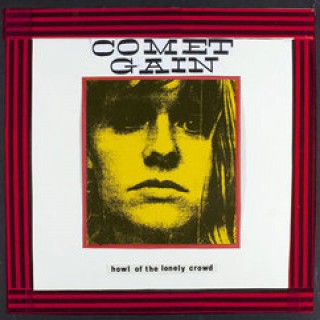
Having never heard of Comet Gain, I was quite surprised to learn they’ve been around since the early 1990s. Receiving high accolades in the indie pop scene in the UK, it seems their attraction never really crossed the pond here to the United States, but here they are releasing their sixth studio album in the US.


Laced with keyboards with a stripped-down, indie-pop sound, the opening track “Clang of the Concrete Swans” starts the album in a catchy frenzy. It’s followed by “The Weekend Dreams,” a bass- and horn-driven track that has a retro British soul sound featuring Rachel Evans on vocals. There’s a real nice mix of material on this album that allows the listener to hear all aspects of Comet Gain’s sound. While Howl of the Lonely Crowd has its share of infectiously toe-tapping pop songs, there are also a few mellow tracks that really add some depth to the feel of this albums. “After Midnight, After Its All Gone Wrong” highlights that toned down sound with an emphasis on David Feck’s vocals. The album takes a poetic turn with the track “A Memorial For Nobody I know,” again with Feck on vocals. The shared vocal spot between Feck and Evans throughout the album is also quite enjoyable. The album is nicely balanced between catchy pop and singer-songwriter material.

(What’s Your Rapture? Records, no address provided)

Monday, October 3, 2011

WOLVES LIKE US – Late Love

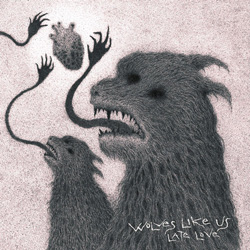
Newcomers to the American hard rock scene is Oslo Norway’s own Wolves Like Us with their debut album Late Love. Featured on this album are a collection of 10 tracks filled with pounding drum lines, melodic yet hard guitar licks, and howling vocals. While coming across as more of a hard rock album than anything else, the track “Shiver In The Heat” plays off a fast punk rock beat.


It’s quite clear that these guys can bring the rock, but it’s unfortunate to say that many of the songs feel like they follow the same formula from track to track. The vocals seem recycled as well — a little one-dimensional. I will say that the vocals are sung with conviction and gut-wrenching power, but feel played out by the middle of the album. Musically, these guys are quite good and the album is put together quite nicely, but I feel that by the fifth track the album ran its course. This might be one to check out on a streaming feed online, but not something I’d suggest picking up.

(Prosthetic Records, 11664 National Blvd. Suite 413, Los Angeles, CA 90064)

Friday, September 30, 2011

BROADCASTER – Joyride

Broadcaster’s digital EP Joyride is two decades too late. If you had the ability to throw a copy of this EP in a time machine and send it to some college radio station in the 1990s it would fit right into the rotation of other ’90s alt-rock acts. But this three-piece act from Long Island got their start just last year, playing mostly ’90s cover songs. Their sound is quite nostalgic for someone like myself who grew up listening to acts like Nada Surf, Pixies, and Dinosaur Jr. Even with that throwback sound, the four tracks on Joyride are quite refreshing. Musically, they have that ’90s sound pegged down perfectly. You can listen to each of these songs and see what bands really inspired Broadcaster’s sound. For example, “Atlantic Sea” has a definite Oasis sound — both in musical and vocal structure. Those stuck 15 years in the past will appreciate their sound, but those also in the now should also be highly impressed with the music these guys are pumping out.


(self-released, no address provided)